

- Key Takeaways
- Why Ramayana Is Already Bigger Than a Film
- The Scale: India’s Most Expensive Film?
- Casting Buzz: The Internet Is Already Invested
- The Real Challenge: Balancing Faith & Filmmaking
- VFX: India’s Make-or-Break Moment
- Global Vision: Not Just for India
- Why Gen-Z Is Surprisingly Interested
- Comparisons: The Shadow of Baahubali
- Multi-Part Universe: Smart Move or Risky Bet?
- Why it’s smart:
- Why it’s risky:
- Public Sentiment: Hope + Fear
- What Will Decide Its Success?
- 1. Storytelling over spectacle
- 2. Respectful adaptation
- 3. Strong performances
- 4. World-class VFX
- 5. Emotional connection
- A Defining Moment for Bollywood
Key Takeaways
- The "Ramayana" project is envisioned as a multi-part, global cinematic universe-level spectacle, aiming to be one of India's most expensive films with Hollywood-level storytelling and VFX to resonate worldwide.
- The film faces immense challenges in balancing its sacred and culturally rooted source material with modern cinematic appeal, requiring world-class VFX and a respectful adaptation to avoid backlash and meet extremely high audience expectations.
- Its success or failure is considered a defining moment for Bollywood, with the potential to redefine the industry's global identity, set new standards for mythological universes, and prove India's capability in world-class visual storytelling.
When it comes to ambition, magnitude, and history in Indian films, there is one film that is increasingly being spoken about: Ramayana.
More than just any movie and more than any blockbuster movie, this could actually turn out to be a historical event in cinematic terms and one of the greatest narrative experiments of Bollywood in recent times.
And right now? The buzz is real, growing, and impossible to ignore.
Why Ramayana Is Already Bigger Than a Film
Let’s be honest — adapting Ramayana isn’t new. India has seen it on television, in animation, on stage, and in countless reinterpretations. But what makes this version different is intent + scale.
This isn’t a devotional retelling.
This is being built as a global cinematic universe-level spectacle.
The goal is clear:
👉 Take an Indian epic
👉 Present it with Hollywood-level storytelling and VFX
👉 Make it resonate worldwide
That’s a bold vision — and also a risky one.
Because when you touch something as sacred and emotionally rooted as Ramayana, expectations aren’t just high… they’re unforgiving.
The Scale: India’s Most Expensive Film?
Insiders suggest that Ramayana could easily become one of the most expensive Indian films ever made.
We’re talking about:
- Massive VFX pipelines
- International technicians and artists
- Detailed set design inspired by ancient India
- Long-term production schedules (possibly multiple parts)
This is not the story of a single film. As the creators intend to create it in parts, much like the way Lord of the Rings and Dune have been done.
And it means everything.
Now, success is no longer determined by a single weekend’s performance but by creating cinematic legacies.
Casting Buzz: The Internet Is Already Invested
Even before official confirmations, casting rumors have taken over social media.
The strongest buzz?
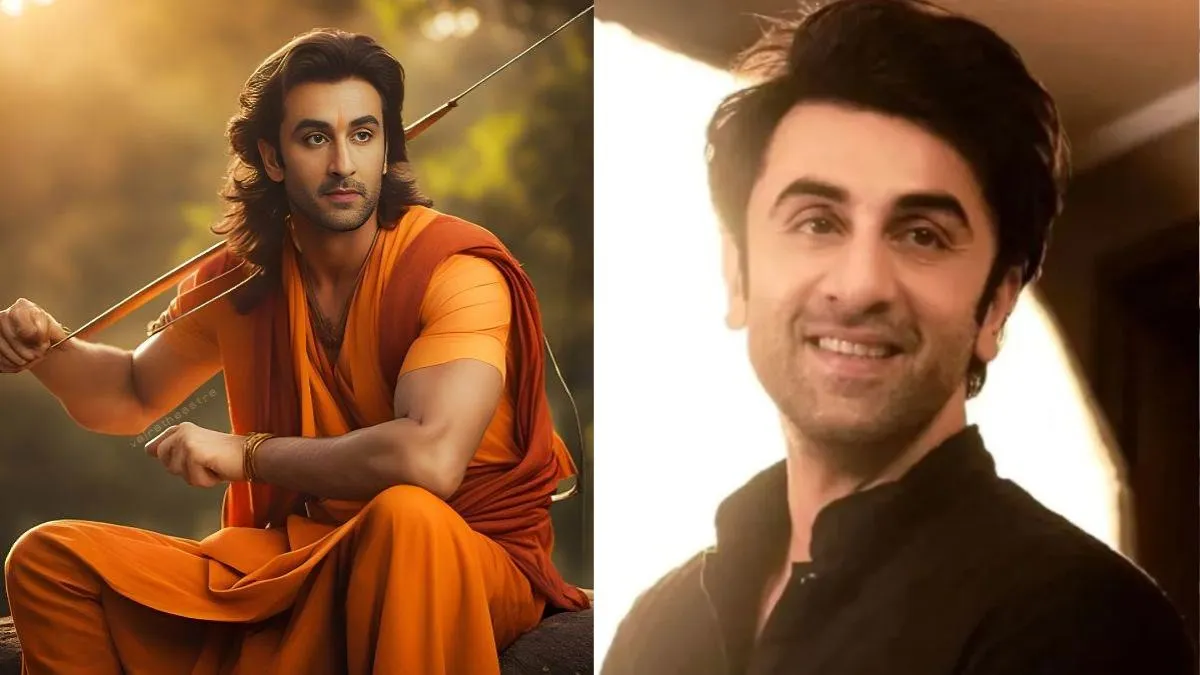
Ranbir Kapoor being considered for Lord Ram.
Now think about that.
Ranbir — known for layered, emotional performances — stepping into a role that requires divinity, calmness, and moral authority. It’s not just acting; it’s embodiment.
Fans are divided:
- Some believe he has the depth to pull it off
- Others question whether a modern star can carry such a timeless figure
And that debate alone shows how invested people already are.
Because in a film like this, casting isn’t just creative — it’s emotional politics.
The Real Challenge: Balancing Faith & Filmmaking
Here’s where things get complicated.
Ramayana is not just mythology — it’s faith, culture, identity.
So the makers are walking a very thin line:
👉 Too modern → risk of backlash
👉 Too traditional → risk of being boring for global audiences
This balance is what will decide everything.
We’ve seen what happens when mythological films miss the tone (Adipurush backlash is still fresh in public memory). That’s why the team behind Ramayana is reportedly taking extra time in scripting, research, and visual planning.
They’re not rushing — and honestly, that’s a good sign.
VFX: India’s Make-or-Break Moment
Let’s address the elephant in the room: VFX quality.
Indian audiences today are not forgiving when it comes to CGI — and rightly so. With exposure to Hollywood films, expectations have gone global.
Ramayana is expected to feature:
- Grand war sequences
- Mythical creatures
- Divine weapons and celestial environments
- Epic landscapes like Lanka and Ayodhya
If done right, this could redefine Indian VFX standards.
If done wrong… it could face massive trolling.
This isn’t just about one film — it’s about proving that India can deliver world-class visual storytelling.
Global Vision: Not Just for India
What’s interesting is that Ramayana is not being made only for Indian audiences.
There’s a clear push towards:
- International distribution
- Global dubbing strategy
- Appeal beyond cultural familiarity
Think about it — stories like Mahabharata and Ramayana have the same emotional depth as Greek mythology or Norse legends.
The difference?
They’ve never been presented at a truly global cinematic scale.
Ramayana might change that.
Why Gen-Z Is Surprisingly Interested
You’d expect mythological content to attract older audiences, right?
Wrong.
Gen-Z is actually engaging with Ramayana content — but in a different way:
- Through reels and short-form storytelling
- Through aesthetic edits of characters
- Through discussions about symbolism and morality
For them, it’s not just religion — it’s storytelling, identity, and visual appeal.
And if the film captures that vibe, it could unlock a whole new audience segment.
Comparisons: The Shadow of Baahubali
Every big Indian epic now gets compared to one benchmark: scale.
And naturally, Ramayana is being compared to films like Baahubali.
But here’s the difference:
- Baahubali was fictional
- Ramayana is sacred
Which means:
👉 Creative freedom is limited
👉 Audience scrutiny is higher
👉 Emotional expectations are deeper
So while comparisons are inevitable, Ramayana is playing a completely different game.
Multi-Part Universe: Smart Move or Risky Bet?
Turning Ramayana into multiple parts is both exciting and dangerous.
Why it’s smart:
- Allows deeper storytelling
- Builds anticipation
- Creates franchise potential
Why it’s risky:
- First part MUST succeed
- Audience patience is limited
- Any controversy can derail the entire plan
In today’s content-heavy world, audiences don’t “wait” anymore.
You either hook them instantly — or lose them.
Public Sentiment: Hope + Fear
Right now, the audience mood is a mix of:
✨ Excitement — finally a grand mythological film
😬 Nervousness — “please don’t mess it up”
And honestly, both are valid.
Because Ramayana isn’t just another release.
It carries emotional weight across generations.
People don’t just want a good film —
They want a respectful, powerful, unforgettable experience.
What Will Decide Its Success?
At the end of the day, everything comes down to execution.
Here’s what will truly matter:
1. Storytelling over spectacle
Big visuals won’t save weak writing.
2. Respectful adaptation
Creative liberty is fine — but not at the cost of essence.
3. Strong performances
Characters like Ram, Sita, and Ravana need depth, not just visuals.
4. World-class VFX
No shortcuts here — audiences will notice everything.
5. Emotional connection
If viewers don’t feel it, nothing else matters.
A Defining Moment for Bollywood
Bollywood has been going through a phase — mixed box office results, changing audience behavior, rising competition from South cinema and OTT platforms.
And in the middle of all this, Ramayana arrives as a make-or-break opportunity.
If it works:
👉 It could redefine Bollywood’s global identity
👉 Open doors for more mythological universes
👉 Prove that Indian stories can dominate globally
If it fails:
👉 It could shake confidence in big-budget storytelling
👉 Reinforce audience skepticism
No pressure, right?
Ramayana isn’t just a film you watch and forget.
It’s a project that could:
- Set new industry standards
- Spark global conversations
- Redefine how Indian mythology is presented on screen
And right now, we’re at the most exciting stage —
the build-up.
Because once the first teaser drops…
Everything changes.





Leave a Reply